

Table of Contents
- What Is Cat Anxiety and Why It Matters
- Behavioral Signs of Anxiety in Cats
- Physical Symptoms of Stress in Anxious Cats
- Common Causes and Triggers of Feline Anxiety
- Separation Anxiety in Cats Symptoms and Management
- How to Calm an Anxious Cat: Practical Strategies
- Cat Stress Relief Products and When to Use Them
- When to Consult Your Veterinarian
- Frequently Asked Questions
Last Updated: September 3, 2026
What Is Cat Anxiety and Why It Matters
Cat anxiety is excessive fear, worry, or stress that interferes with daily behavior and well-being. Unlike temporary nervousness, true anxiety persists and intensifies without intervention. Many owners mistake anxious behaviors for personality quirks, missing opportunities for early intervention.
Cats mask distress differently than dogs, they hide, stop eating, or develop destructive behaviors rather than pacing or whining. Anxiety stems from environmental changes, past trauma, genetic predisposition, or routine shifts. A cat's stress response activates their fight-or-flight system, flooding their body with cortisol and adrenaline. Prolonged stress can lead to secondary health issues including feline idiopathic cystitis, overgrooming-induced skin damage, and immune suppression (peer-reviewed research).
Recognizing anxiety early allows you to implement calming strategies before behaviors become habitual.
Behavioral Signs of Anxiety in Cats
Behavioral changes are often the first visible indicator of feline anxiety, manifesting across feeding, playtime, family interaction, and solitude.
Hiding and Avoidance
Excessive hiding is a common anxiety sign. An anxious cat may spend 12+ hours per day in closets, under beds, or behind furniture, emerging only for brief bathroom or feeding trips. This hypervigilance response indicates the cat perceives the environment as threatening.
Avoidance extends beyond physical spaces. Anxious cats often avoid their owners, refuse interaction, and show little interest in previously enjoyed activities. A naturally reserved cat is calm when approached; an anxious cat shows visible tension, flattened ears, dilated pupils, or a tucked tail.
Excessive Vocalization and Restlessness
Anxious cats often vocalize excessively, yowling, meowing, or crying at unusual hours. This vocalization differs from normal communication; it's more intense, repetitive, and unresponsive to soothing attempts.
Restlessness accompanies vocalization. Your cat may pace repeatedly, jump between furniture without purpose, or exhibit trembling when stationary. Nocturnal activity spikes are common, with cats becoming hyperactive at night while sleeping peacefully during the day.
Litter Box Avoidance and Inappropriate Urination
Litter box avoidance frequently signals anxiety. An anxious cat may eliminate in corners, on furniture, or other areas rather than the box. Cats feel exposed while using the litter box; an anxious cat may associate it with a previous startling event or fear interruption.
Some anxious cats develop inappropriate urination as a stress response, spraying urine to mark territory and establish control. Consult your veterinarian to rule out medical causes like feline idiopathic cystitis. Retraining requires addressing underlying anxiety through quieter box placement, additional boxes, or visual barriers.
Physical Symptoms of Stress in Anxious Cats
Physical manifestations of anxiety reflect the cat's internal stress state and provide concrete evidence of feline anxiety.
Body Language Signals
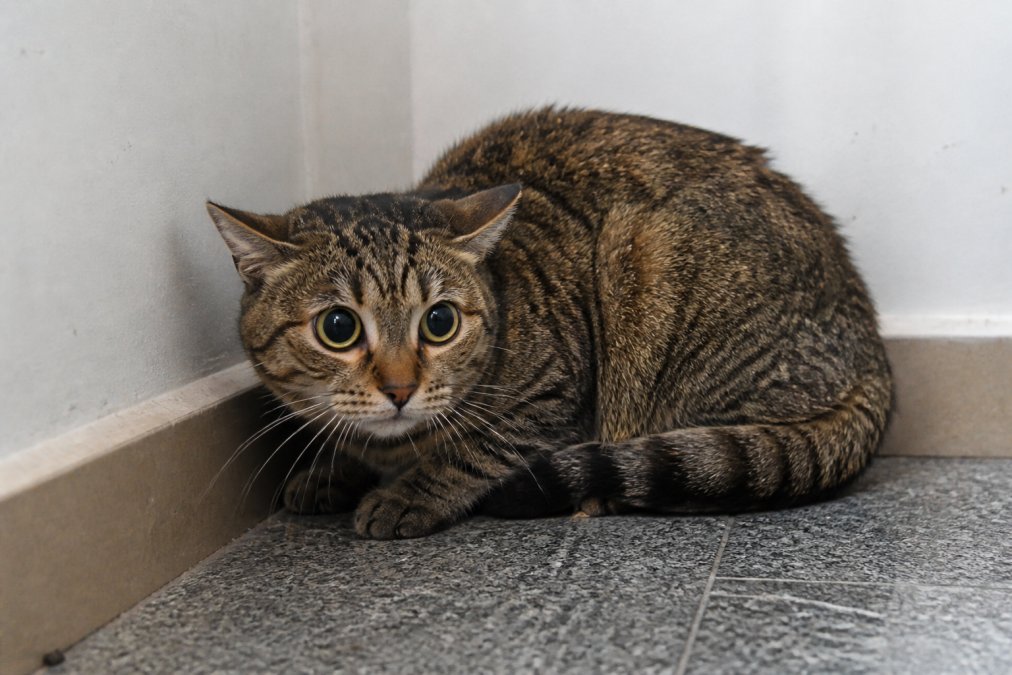
A cat's body communicates anxiety through specific postural changes. Flattened ears pinned back signal fear or defensive anxiety. Dilated pupils indicate heightened arousal and hypervigilance. A tucked or wrapped tail shows submission and fear.
Whisker position also matters. Anxious cats often pull their whiskers back slightly, reducing sensory reach and appearing withdrawn. Muscle tension is visible in an anxious cat's overall body, appearing rigid rather than relaxed. Some anxious cats crouch low to the ground, reducing their profile and preparing for rapid escape.
Changes in Appetite and Grooming
Appetite suppression is a direct physical consequence of anxiety. When a cat's nervous system remains activated, digestive function decreases. An anxious cat may refuse food entirely or eat only small amounts, leading to weight loss.
Grooming patterns shift dramatically. Some become obsessive groomers, licking specific areas excessively until skin damage occurs (psychogenic alopecia). Other anxious cats neglect grooming entirely, resulting in a matted, unkempt appearance. Gastrointestinal upset frequently accompanies anxiety, with diarrhea, constipation, or vomiting appearing cyclically and worsening during high-stress periods.
Common Causes and Triggers of Feline Anxiety
Understanding what triggers your cat's anxiety is essential for implementing effective management strategies.
Environmental Changes and Post-Adoption Transition Anxiety
Environmental changes are among the most common anxiety triggers. Moving to a new home, renovations, rearranged furniture, or new pets arriving disrupt a cat's sense of control and safety. Post-adoption transition anxiety is particularly acute in rescue cats unfamiliar with their new environment.
Loud noises, fireworks, construction, and thunderstorms trigger acute anxiety in many cats. Changes in routine create anxiety because cats thrive on predictability. A shift in your work schedule, feeding times, or rearranging the cat's favorite sleeping area can trigger anxiety.
Age-Specific Anxiety and Breed Predispositions
Age influences anxiety expression. Kittens separated too early from their mother often develop anxiety-related behaviors throughout life. Senior cats experiencing declining hearing or vision may develop anxiety as sensory loss makes them feel vulnerable.
Certain breeds show predispositions toward anxiety. Siamese and other vocal breeds express anxiety more openly through vocalization. Genetic factors play a role; cats with anxious parents are more likely to develop anxiety themselves.
Separation Anxiety in Cats Symptoms and Management
Separation anxiety occurs specifically when the cat is separated from their owner or primary attachment figure.
Symptoms include excessive vocalization when you prepare to leave, destructive behavior directed at doors or windows, inappropriate elimination near your bedroom or the exit, and signs of panic when you leave. Some cats develop self-injury behaviors, overgrooming to the point of hair loss or skin damage.
Management requires gradual desensitization. Start by leaving for brief periods (30 seconds), then return before the cat becomes distressed. Gradually extend the duration. Establishing a departure routine that doesn't create drama reduces anticipatory anxiety. Pheromone diffusers that mimic natural calming pheromones reduce anxiety responses. Some owners find that leaving calming music or white noise helps mask external sounds that might trigger anxiety during separation.
How to Calm an Anxious Cat: Practical Strategies
Managing anxiety requires a multi-faceted approach. No single strategy works for all cats; effective management typically combines environmental modifications, behavioral techniques, and sometimes pharmacological support.
Environmental Enrichment and Safe Havens
Creating a safe haven is foundational. This is a dedicated space where your cat feels secure, with everything they need within reach: food, water, litter box, and comfort items. The safe haven should be quiet, away from high-traffic areas, and equipped with vertical spaces where the cat can observe without being observed.
Environmental enrichment reduces anxiety by providing mental stimulation and a sense of control. Vertical space is critical. Cats feel safer when they can climb to elevated positions. Cat trees, wall-mounted shelves, and window perches give anxious cats escape routes and vantage points where they can observe without feeling threatened.
Scent management matters. Keep your cat's environment consistent with familiar bedding, toys, and items carrying your scent.
Behavioral Modification and Positive Reinforcement
Behavioral modification addresses anxiety-driven behaviors through consistent, patient training. Positive reinforcement, rewarding calm behavior with treats, play, or affection, teaches your cat that calm responses earn rewards. Never punish anxiety-driven behaviors; punishment increases anxiety and damages your relationship.
Desensitization gradually exposes your cat to anxiety triggers in controlled, low-intensity ways. Counterconditioning pairs anxiety triggers with positive experiences. Routine establishment reduces anxiety by creating predictability through consistent feeding times, play schedules, and bedtime routines.
Pheromone Diffusers and Other Calming Aids
Pheromone diffusers release synthetic versions of natural feline calming pheromones that signal safety and familiarity, reducing anxiety responses. Studies show that pheromone diffusers can decrease anxiety-related behaviors in many cats, though effectiveness varies by individual (peer-reviewed research).
Calming supplements containing L-theanine, tryptophan, or magnesium may help reduce anxiety by supporting neurotransmitter function. Consult your veterinarian before introducing supplements. Music and sound therapy specifically designed for cats can reduce anxiety through frequencies matching cat hearing ranges.
Cat Stress Relief Products and When to Use Them
The market for cat anxiety products has expanded significantly. Understanding what each category does helps you choose appropriately for your cat's specific anxiety presentation.
Calming Beds and Anxiety Wraps
Calming beds provide comfort and security through design features that appeal to anxious cats. Raised edges create a nest-like environment where cats feel contained and protected. Many anxious cats gravitate toward calming beds naturally, spending extended periods resting in them.
Anxiety wraps apply gentle, sustained pressure, activating the parasympathetic nervous system and promoting relaxation. Some anxious cats respond remarkably well to anxiety wraps, showing visible calming within minutes. Individual tolerance varies.
Enrichment Toys and Interactive Tools
Enrichment toys redirect anxious energy into positive activities. Puzzle feeders engage your cat's problem-solving abilities, providing mental stimulation that reduces anxiety-driven pacing. Snuffle mats encourage natural foraging behaviors and provide sustained engagement.
Interactive toys that respond to your cat's touch give anxious cats a sense of control. Lick mats provide extended engagement and self-soothing through licking. The key to enrichment success is rotation, introducing new toys periodically maintains novelty and engagement.
When to Consult Your Veterinarian
Professional veterinary guidance becomes necessary when anxiety significantly impacts your cat's quality of life or when self-help strategies prove insufficient. Your veterinarian can rule out medical causes that mimic anxiety, hyperthyroidism, pain conditions, or neurological issues, and recommend appropriate treatment.
Veterinary consultation is essential if your cat shows signs of self-injury from overgrooming, refuses food for extended periods, or displays aggression related to anxiety. Your veterinarian may recommend anxiolytic medications that reduce the neurochemical basis of anxiety. These work best when combined with behavioral modification and environmental management. Common options include SSRIs (selective serotonin reuptake inhibitors) that increase serotonin availability, reducing anxiety over weeks of consistent use (peer-reviewed research).
Before your appointment, document your cat's anxiety symptoms: when they occur, what triggers them, how long they last, and what behaviors accompany them.
Recognizing the signs of anxiety in cats early gives you the opportunity to intervene before anxiety becomes entrenched. Whether your cat is experiencing post-adoption transition anxiety, separation anxiety, or generalized stress, a combination of environmental management, behavioral modification, and appropriate products can significantly improve their well-being. At Calm Haven Pets, we understand that anxious cats need thoughtful support; our curated selection of premium calming beds, anxiety wraps, and enrichment toys is designed to help your cat feel safe, comfortable, and relaxed. Start with environmental assessment, implement calming strategies progressively, and consult your veterinarian if anxiety persists or worsens.
| Anxiety Type | Primary Trigger | Best Management Approach | When to Seek Vet Help |
|---|---|---|---|
| Separation anxiety | Owner departure | Desensitization, calming aids, routine | Persistent despite 4+ weeks of training |
| Environmental anxiety | Changes, noise, new pets | Safe haven, enrichment, pheromones | Extreme fear responses, self-injury |
| Post-adoption anxiety | New home transition | Patience, gradual exposure, security | Refusal to eat beyond 3-5 days |
| Generalized anxiety | Multiple triggers | Enrichment, routine, behavioral modification | Persistent across all contexts |
Frequently Asked Questions
How long does it take to reduce signs of anxiety in cats?
Timeline varies significantly by anxiety type and intervention approach. Environmental changes often show results within 2-4 weeks. Behavioral modification through desensitization typically requires 6-12 weeks of consistent practice. Medications take 4-6 weeks to reach full effectiveness.
Can anxiety in cats be cured permanently?
Anxiety can be managed effectively, though "cure" isn't the right framework. Most anxious cats improve substantially with appropriate intervention but may retain some anxiety sensitivity. The goal is reducing anxiety to a level that doesn't interfere with quality of life.
Is my cat's anxiety my fault?
Anxiety has multiple causes, genetics, early life experiences, environmental factors, and individual temperament all play roles. What matters now is how you respond. Implementing calming strategies and seeking professional help demonstrates commitment to your cat's wellbeing.
Can I give my cat human anxiety medications?
Never give your cat medications prescribed for humans. Dosages are calculated for human body weight and metabolism; cat physiology differs significantly. Only use medications prescribed by your veterinarian specifically for your cat.
What's the difference between a shy cat and an anxious cat?
A shy cat is naturally reserved but calm when approached. An anxious cat shows visible stress signals, dilated pupils, flattened ears, trembling, and may panic when approached. Shy cats gradually warm to people; anxious cats remain tense even in familiar situations.
Should I get another pet to help my anxious cat?
Adding another pet typically increases anxiety initially and may not resolve the underlying issue. A new pet adds an environmental stressor. Only consider this option after your cat's primary anxiety is well-managed, and introduce the new pet extremely gradually.
Frequently Asked Questions
What are the most common signs of anxiety in cats?
Common signs include hiding, excessive vocalization, litter box avoidance, overgrooming, appetite changes, and body language shifts like flattened ears and tail twitching. Behavioral changes such as aggression, restlessness, and startle responses also indicate anxiety. Physical symptoms may include dilated pupils, trembling, and lip licking. Each cat displays anxiety differently, so observe your cat's normal behavior to spot changes.
How does the 3-3-3 rule apply to cats adjusting to a new home?
The 3-3-3 rule suggests cats need 3 days to decompress, 3 weeks to adjust, and 3 months to feel fully at home. Post-adoption transition anxiety is common during these phases. In the first 3 days, provide a safe haven with food, water, and a litter box. After 3 weeks, most cats begin exploring. By 3 months, they typically settle into their new environment. This timeline helps you understand when anxiety symptoms should improve.
What's the difference between separation anxiety in cats and general anxiety?
Separation anxiety occurs specifically when your cat is alone or separated from you, causing excessive vocalization, destructive behavior, and litter box avoidance. General anxiety can occur anytime due to environmental triggers, loud noises, or changes in routine. Separation anxiety in cats symptoms include pacing and inappropriate urination when owners leave. Identifying which type your cat experiences helps you choose the right management strategy.
What are non-medicinal ways to soothe an anxious cat?
Create a predictable routine, provide environmental enrichment through interactive toys and snuffle mats, establish safe havens where your cat can hide, and use pheromone diffusers to reduce stress. Interactive DIY calming tools like lick mats encourage positive behavior. Behavioral modification through positive reinforcement builds confidence. Calming beds designed for anxious cats offer comfort and security. Combine these approaches for the best results.
When should I contact my veterinarian about my cat's anxiety?
Contact your vet if anxiety symptoms persist for more than a few weeks, if your cat stops eating or uses the litter box abnormally, or if behavioral changes are severe. Your vet can rule out medical conditions like feline idiopathic cystitis that mimic anxiety. They can also discuss anxiolytic medication if needed. Early veterinary consultation ensures your cat receives proper care and prevents complications.
Are certain cat breeds more prone to anxiety?
Some breeds show breed-specific predispositions to anxiety. Siamese and Oriental cats tend to be more vocal and sensitive to environmental changes. Rescue cats often experience post-adoption transition anxiety regardless of breed. Age-specific anxiety also occurs, with senior cats becoming more anxious due to cognitive changes. Understanding your cat's breed and age helps you anticipate anxiety triggers and provide appropriate support.
How can I tell if my cat is stressed versus just acting out?
Stressed cats display consistent body language changes: flattened ears, dilated pupils, and a low tail position. They may hide more, eat less, and show startle responses. Acting out is often situational and less persistent. Stress-related behaviors like overgrooming, inappropriate urination, and avoidance are sustained responses to anxiety. Track patterns over days or weeks to distinguish stress from temporary behavior changes.
External Sources Referenced:
American Veterinary Medical Association guidelines on feline behavior and anxiety
International Society of Feline Medicine resources on stress and anxiety in cats
Veterinary Behavior Society information on behavioral assessment and anxiety management
This article was written using GrandRanker