

Table of Contents
- Why Cats Scratch and What It Means
- How to Train a Cat to Use a Scratching Post
- Best Cat Scratching Deterrents to Protect Your Furniture
- Trimming Your Cat's Claws Properly
- Using Cat Enrichment Toys to Redirect Scratching Behavior
- Positive Reinforcement and Redirection Techniques
- Managing Scratching in Multi-Cat Households
- Frequently Asked Questions
Why Cats Scratch and What It Means
Cats scratch for reasons far beyond nail maintenance. At Calm Haven Pets, we recognize that scratching is natural and healthy, but when it damages your furniture, redirection becomes essential.
Scratching serves multiple purposes. Cats have scent glands in their paw pads, and scratching marks territory and leaves chemical signals for other cats. Scratching also removes the outer nail sheath, keeping claws sharp and healthy, while providing physical exercise and muscle stretching. Stress, boredom, or environmental changes can trigger excessive scratching, particularly in multi-cat households where territorial tension increases. Kittens and younger cats scratch more frequently as they explore, while older cats may scratch less but with greater intensity.
Normal scratching occurs on appropriate surfaces in predictable patterns. Destructive scratching targets furniture and household items despite available alternatives. Excessive scratching, bald patches, or signs of stress warrant a veterinary consultation to rule out allergies or parasites.
How to Train a Cat to Use a Scratching Post
Training a cat to use a scratching post requires patience, strategic placement, and understanding your cat's preferences. The goal is redirecting this natural behavior toward appropriate surfaces.
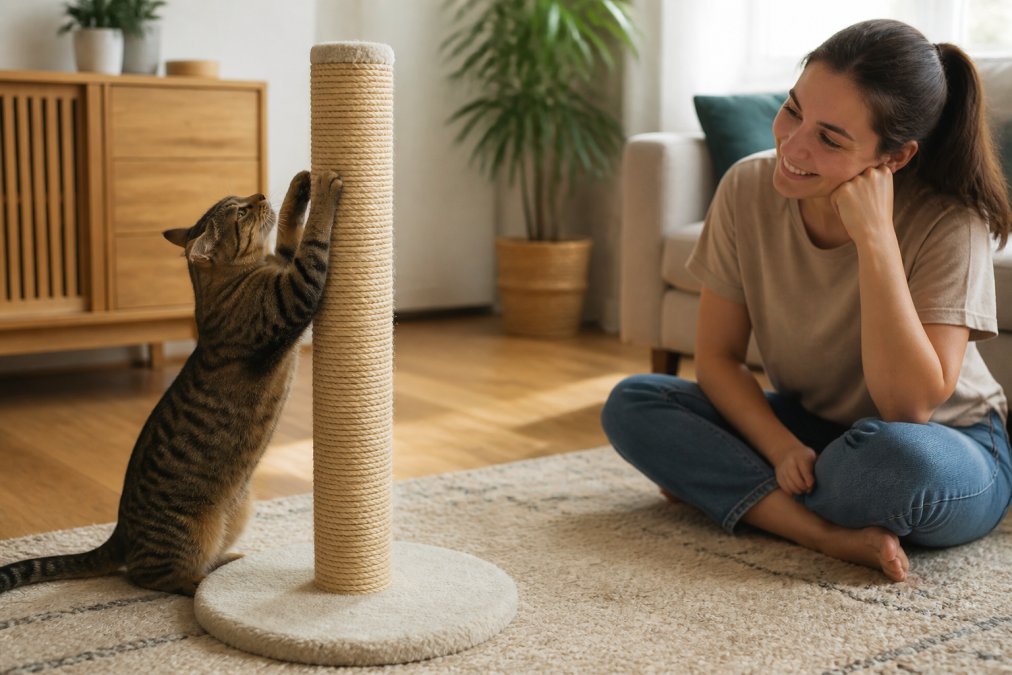
Choosing the Right Scratching Surface
Cats have distinct texture preferences. Sisal rope provides satisfying resistance and appeals to many cats. Corrugated cardboard offers a different texture and is more affordable, though it requires frequent replacement. Some cats prefer vertical surfaces for stretching, while others favor horizontal or angled options.
Stability is critical. A wobbling post will be abandoned quickly. Your cat needs to feel secure while scratching. Look for posts with weighted bases or wall-mounted options. Height should accommodate full stretching, ideally 30 inches or taller for vertical posts.
Material quality affects longevity and appeal. Premium posts with tightly wound sisal rope or high-quality cardboard maintain texture appeal longer and justify the investment through consistent use and reduced furniture damage.
Positioning for Success
Location determines whether your cat will use the post. Place posts near areas where your cat already scratches. If your cat targets a specific couch corner, position a post adjacent to it. Cats often scratch after naps or play, so placing posts near sleeping areas increases usage.
Posts should be positioned where your cat can see the room and survey their territory. Visible, open areas are preferred over corners or closets. Multiple scratching posts throughout your home provide more opportunities for this natural behavior. In multi-cat households, one post per cat plus one shared post reduces territorial conflict.
Best Cat Scratching Deterrents to Protect Your Furniture
Deterrents support the primary strategy of redirecting scratching to appropriate surfaces by making furniture less appealing during training.
Physical Barriers and Covers
Vinyl carpet runners placed over furniture edges with textured side outward create an unpleasant scratching surface. Double-sided tape is highly effective and humane, cats dislike the sticky sensation and quickly avoid taped surfaces. Reapply tape every few weeks as it loses stickiness. Aluminum foil works similarly, though it's less aesthetically pleasing.
Scratch-resistant furniture covers provide both protection and an unappealing texture. Choose covers that fit snugly and don't shift, as loose covers may encourage scratching.
Scent-Based and Texture Deterrents
Pheromone diffusers release synthetic cat pheromones that promote calm and reduce stress-related scratching. These work best combined with other strategies and are particularly helpful in multi-cat households. Effects typically appear within 1-2 weeks (peer-reviewed research).
Citrus scents naturally deter many cats, though sprays require frequent reapplication. Use caution with essential oils, as some are toxic to cats.
Nail caps are soft plastic sheaths that fit over claws, dulling scratching effectiveness. While they don't stop scratching entirely, they reduce furniture damage. Caps last 4-6 weeks before falling off naturally as claws grow (peer-reviewed research).
Trimming Your Cat's Claws Properly
Regular nail trimming reduces damage when scratching occurs and can reduce stress in some cats. Scissor-style clippers offer better control than guillotine-style options and should be sharp, dull clippers crush nails rather than cutting cleanly.
Understanding nail anatomy is critical. The nail consists of a hard outer shell and an inner quick containing blood vessels and nerves. Trim only the clear or white portion, staying well away from the pink or dark quick. For dark nails where the quick isn't visible, trim conservatively.
Indoor cats typically need trimming every 2-3 weeks, while outdoor cats may wear down claws naturally. Kittens and senior cats often need more frequent trims.
Choose calm times when your cat is relaxed, such as after meals or play. Start slowly and don't trim all claws in one session if your cat resists. Pair trimming with treats and praise to create positive associations.
Using Cat Enrichment Toys to Redirect Scratching Behavior
Environmental enrichment reduces stress-related scratching by providing mental stimulation and appropriate outlets for natural behaviors.
Interactive toys that encourage climbing and scratching satisfy multiple needs. Cat trees with multiple levels and varied materials, sisal rope, corrugated cardboard, appeal to different preferences and provide vertical space.
Lick mats and snuffle mats engage foraging instincts and provide mental stimulation that reduces anxiety-driven scratching. Freeze them with wet food or treats to extend playtime.
Rotating toys prevents boredom and maintains interest. Introduce new toys periodically and store others away, then rotate them back. Cats show renewed interest in toys they haven't seen in weeks.
Wand toys and interactive play sessions directly reduce stress and provide appropriate hunting outlets. Daily play sessions of 10-15 minutes significantly impact stress levels and scratching behavior (aafco.org). Calm Haven Pets offers enrichment toys designed to support your cat's wellness and reduce anxiety-driven behaviors.
Positive Reinforcement and Redirection Techniques
Positive reinforcement is far more effective than punishment. Cats don't respond well to punishment for scratching, it creates fear and anxiety, often worsening the behavior.
Reward your cat immediately after they scratch the post with praise, treats, or play. Timing is crucial; rewards must occur within seconds so your cat makes the connection. Catnip or silvervine sprinkled on the post can attract your cat and encourage scratching. Observe your individual cat's preferences, as not all cats respond to catnip.
Redirection involves gently moving your cat away from furniture and guiding them toward the post when caught scratching inappropriately. This works best immediately, before the behavior is established. Carry your cat to the post, place their paws on it, and reward them for scratching there. Consistency across all household members is essential.
Most cats show consistent preference for the scratching post within 2-4 weeks of consistent training, though some take longer. Patience and consistency matter more than speed. Never punish your cat for scratching, as this creates anxiety without addressing the underlying need.
Block access to frequently targeted furniture during training, use deterrents on vulnerable areas, and ensure multiple appropriate scratching surfaces are easily accessible. Make scratching the post the easiest and most rewarding option.
Managing Scratching in Multi-Cat Households
Multi-cat households see increased territorial scratching as cats reinforce territory. Tension between cats can drive stress-related scratching behavior.
Provide multiple scratching posts in different locations, one per cat plus one additional shared post. Position posts in high-traffic areas and quieter zones where less confident cats can access surfaces without encountering dominant cats.
Pheromone diffusers reduce tension and stress, which often manifests through increased scratching. Place diffusers in central areas where cats spend the most time.
Observe your cats' interactions to identify which cats scratch more frequently and whether scratching correlates with tension. Provide elevated escape routes, hiding spots, and separate resources in different areas to give less confident cats safe spaces and reduce overall stress.
Enrichment activities that tire out multiple cats simultaneously reduce scratching driven by excess energy or boredom. Interactive play sessions, climbing structures, and rotating toys keep all cats engaged and less likely to engage in destructive scratching or territorial conflict.
Managing cat scratching effectively requires a multi-faceted approach combining appropriate scratching surfaces, deterrents, training, and enrichment. The process takes patience and consistency, but results in a cat that satisfies their natural scratching needs without damaging your home. Calm Haven Pets supports this journey with premium enrichment toys and calming products designed to reduce anxiety-driven scratching while promoting your cat's overall wellness and comfort.
| Strategy | Best For | Timeline | Effectiveness |
|---|---|---|---|
| Scratching posts | Redirecting natural behavior | Immediate introduction | High with proper placement |
| Deterrent tape | Protecting furniture | 2-4 weeks | Moderate to high |
| Nail trimming | Reducing damage severity | Ongoing every 2-3 weeks | Moderate |
| Enrichment toys | Reducing boredom and stress | Immediate | High when rotated regularly |
| Pheromone diffusers | Calming anxious cats | 1-2 weeks to show effects | Moderate to high |
| Positive reinforcement | Building habit formation | 2-4 weeks minimum | High with consistency |
Frequently Asked Questions
How do I stop my cat from excessive scratching?
Stop cat scratching by combining multiple strategies: provide appropriate scratching posts with sisal rope or corrugated cardboard, use deterrents like double-sided tape on furniture, trim claws regularly, and redirect your cat to approved surfaces with positive reinforcement. Most cats respond when you address both the behavior and the underlying need to scratch for territorial marking and claw maintenance.
How do I train a cat to use a scratching post?
Place scratching posts in high-traffic areas and near furniture your cat already targets. Sprinkle catnip on the post and reward your cat with treats and praise when they use it. If your cat ignores it, try different textures like sisal rope, corrugated cardboard, or carpet. Cats have texture preferences, so experimenting helps. Consistency and patience typically leads to habit formation.
What are the best cat scratching deterrents?
Double-sided tape, aluminum foil, and vinyl carpet runners discourage scratching through texture. Scent-based deterrents and pheromone diffusers reduce stress-related behavior. Furniture covers provide physical protection. The most effective approach combines multiple deterrents with attractive scratching alternatives, addressing both prevention and redirection simultaneously.
Is it normal for cats to scratch furniture?
Yes, scratching is a normal, healthy feline behavior tied to territorial marking, claw maintenance, and stress relief. Cats shed their nail sheath through scratching and use scent glands in their paws to mark territory. The goal isn't to eliminate scratching but to redirect it to appropriate surfaces like scratching posts and enrichment toys designed for this purpose.
This article was written using GrandRanker